XRP Pro crypto trading bot: 30-day performance review
Since moving into active operations mode with AI crypto bots in March 2026, we are now returning with a refreshed monthly update format.
Our AI crypto trading bots have now been running in active operations long enough to establish a regular monthly update cadence from the Crypto Trading Platform (CTP) team. This month, instead of highlighting one bot, we compare three Pro bots running in parallel on different assets: Uni ETH 3% – Pro, Uni SOL 3% – Pro, and Uni XRP 5% – Pro.
All three bots traded on Binance over the same roughly 30-day window, from around 20 May to 18 June 2026, using the same ElasticImpulseGrid strategy logic. Reviewing them side by side gives a practical view of how one strategy behaves across assets with different volatility profiles, and where its falling-mode defenses and commission-control mechanism made the biggest difference.
All three dashboards closed the period in positive territory. Uni XRP 5% – Pro delivered the strongest result on both PnL and ROI, Uni ETH 3% – Pro generated by far the largest turnover and the highest share of matched orders, and Uni SOL 3% – Pro landed in the middle on profit while paying the lowest commission in absolute USDT.
These results provide another practical example of how crypto trading automation can be applied across different digital assets while maintaining consistent strategy execution and risk controls.
| Performance indicator | Uni ETH 3% – Pro | Uni SOL 3% – Pro | Uni XRP 5% – Pro |
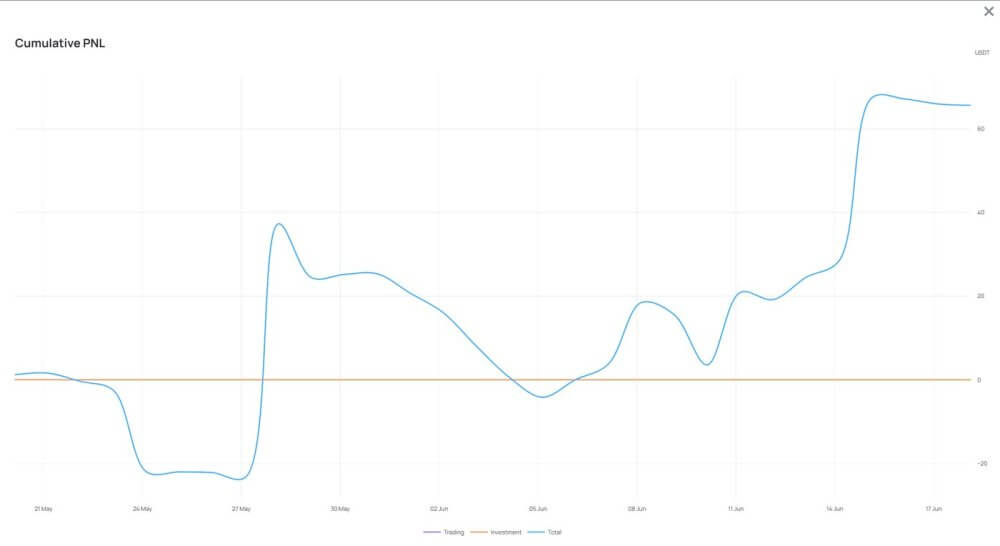
| PNL | +53.17 USDT | +39.81 USDT | +65.53 USDT |
| ROI | +1.3% | +2.1% | +2.9% |
| Total orders | 27,744 | 32,483 | 31,604 |
| Matched orders | 5,230 (18.8%) | 3,621 (11.2%) | 2,439 (7.7%) |
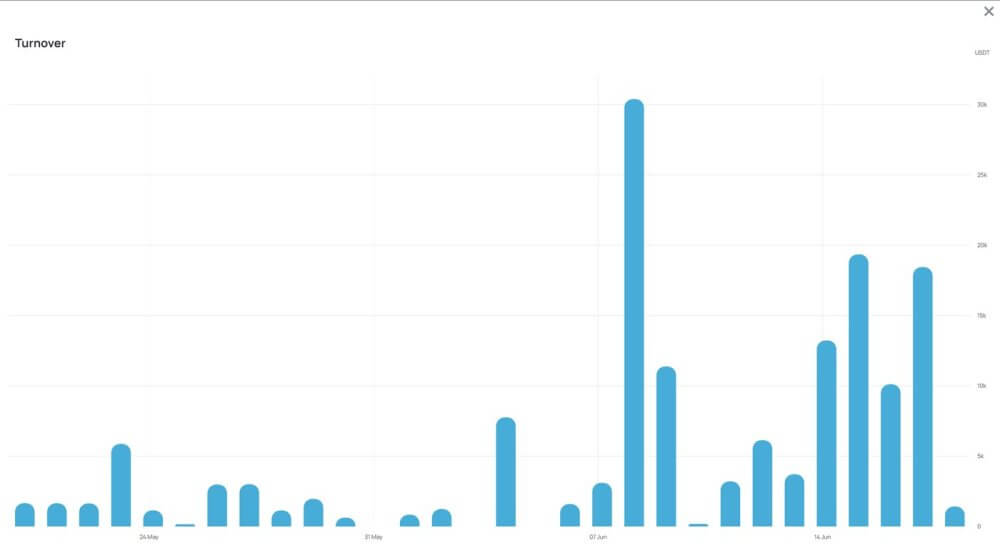
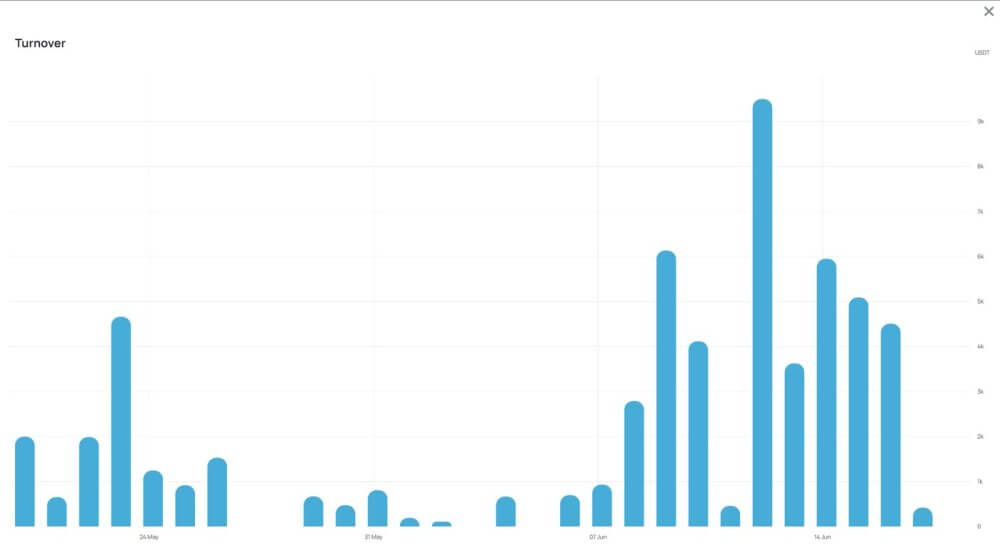
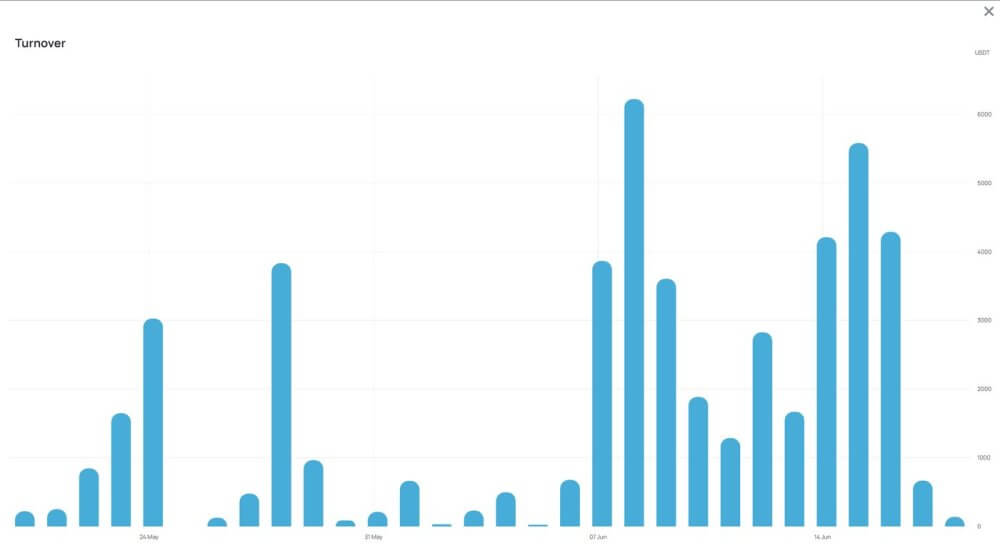
| Turnover | 154,209 USDT | 60,241 USDT | 50,211 USDT |
| Commission | 9.3 USDT | 7.3 USDT | 8.3 USDT |
| Trading pair | ETH/FDUSD | SOL/FDUSD | XRP/FDUSD |
| Exchange | Binance | Binance | Binance |
The matched-order percentage is the filling rate – how many of the orders the bot placed were actually executed. None of the three bots forced execution: each placed a broad order ladder and only let the market fill the orders that matched its strategy logic, which is why filling rates stay well under 20% even though total order counts run into the tens of thousands.
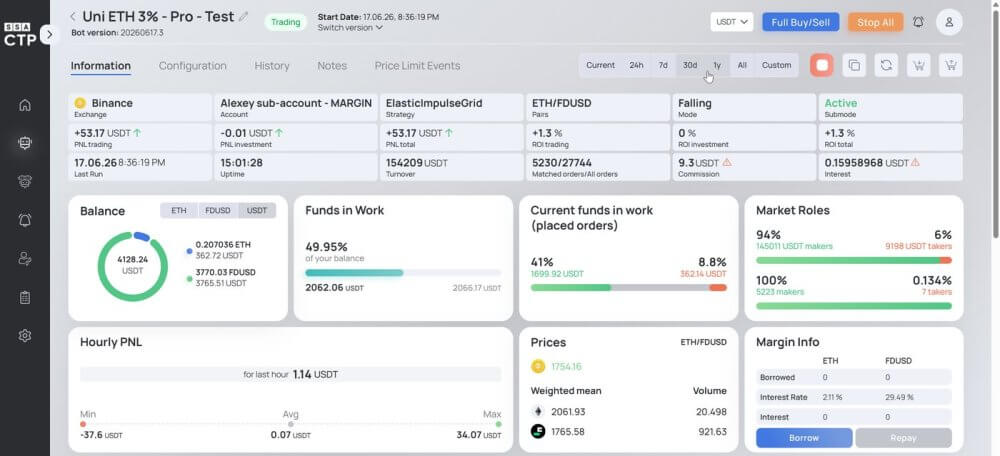
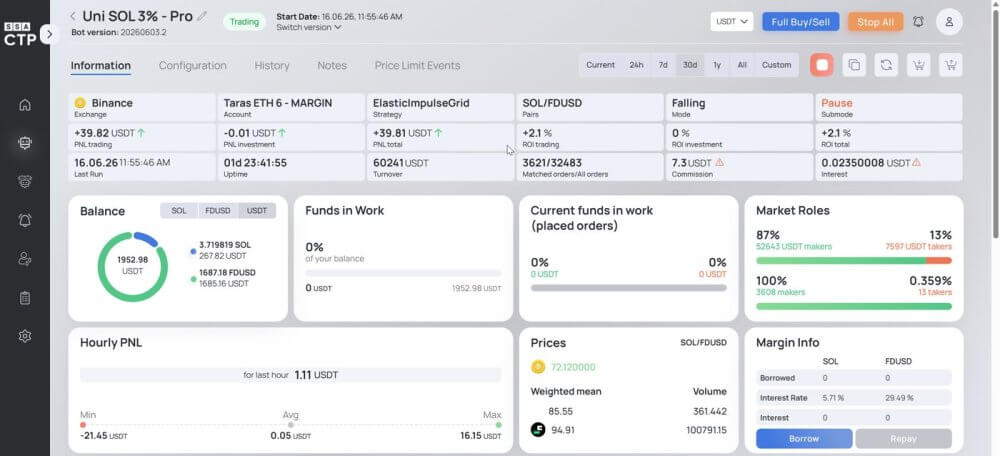
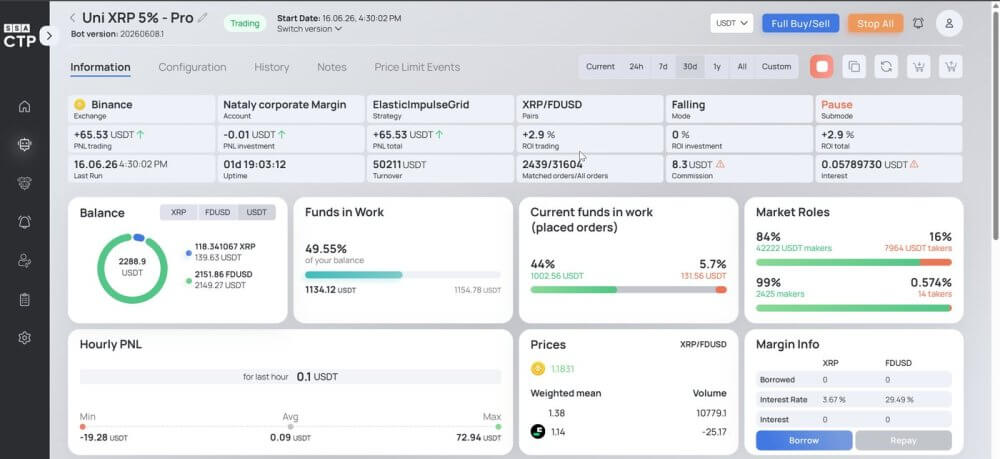
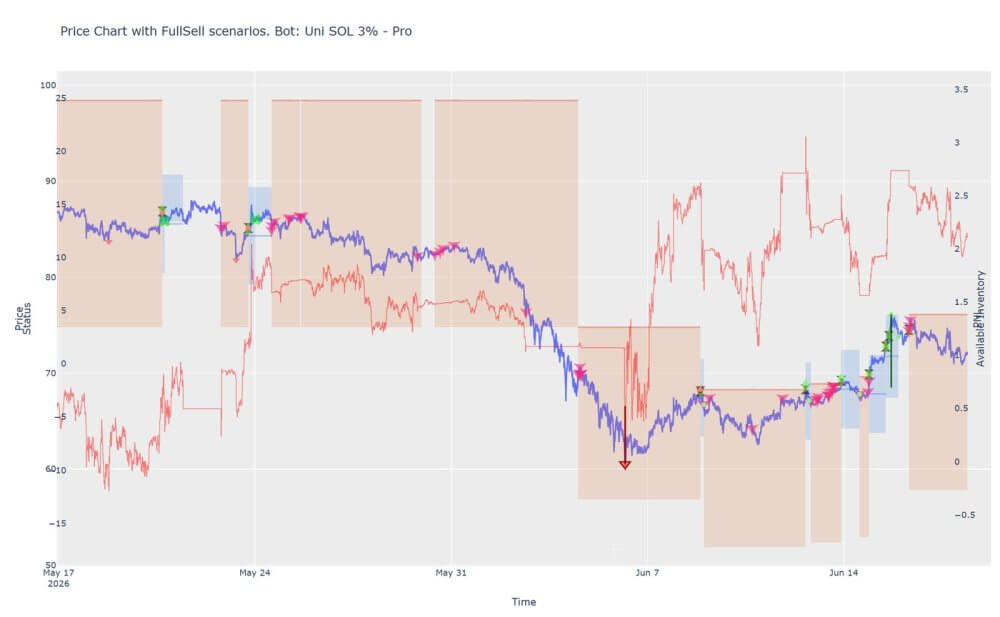
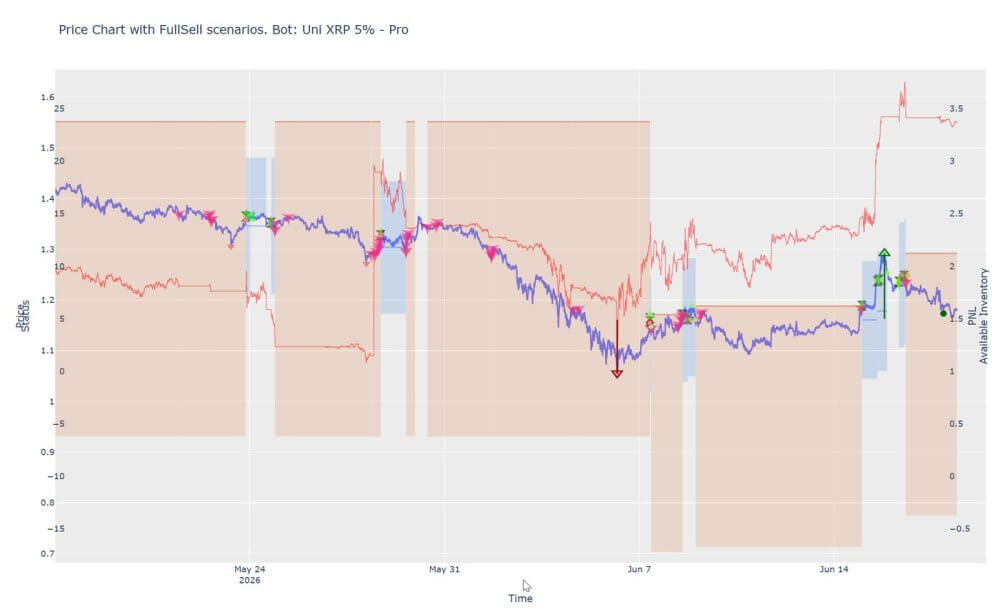
Each bot’s trading chart plots price action against the strategy’s standard and falling modes, with markers showing buy/sell scenarios and shaded bands marking when falling-mode logic was active. The defining feature of this strategy family is that it does not just wait out a downtrend: when price drops, the bot switches into a defensive falling mode and, where needed, draws on a loan strategy to keep working the market instead of standing still. This approach is a core element of the CTP crypto AI trading bot architecture, designed to adapt to changing market conditions without interrupting trading activity.
For ETH and SOL the price legs down were the sharpest – ETH dropped from roughly 2,125 to about 1,600 USDT in the first half of June, and SOL fell from around 86 to near 60 USDT over the same stretch – while XRP’s decline from about 1.38 to roughly 1.14–1.20 USDT was comparatively shallower. In all three cases the falling-mode bands line up with the steepest part of the price drop, and each chart shows the bot continuing to place and fill orders through the decline rather than pausing.
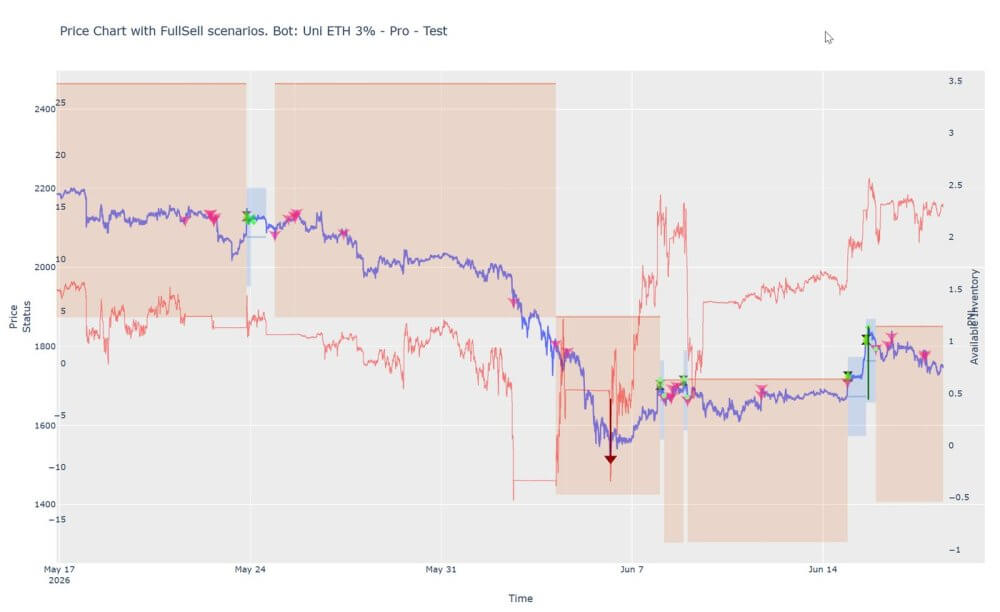
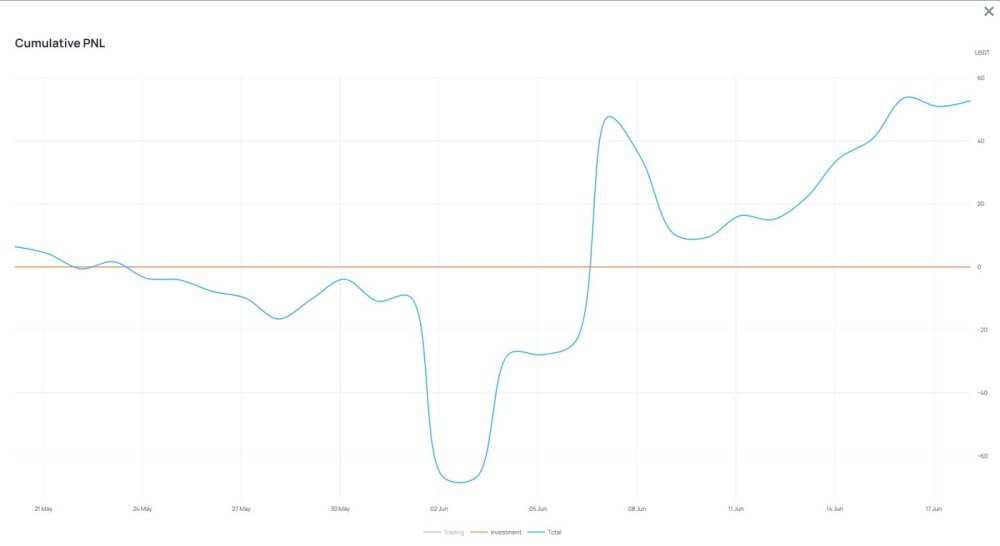
Uni ETH 3% – Pro had the rockiest path of the three: PnL slipped under –20 USDT in late May, plunged to roughly –65 USDT around 1–2 June – the deepest drawdown of any of the bots – then recovered fast to about +48 USDT by 7 June, dipped again, and rallied to its period high near +53 USDT in the final days.
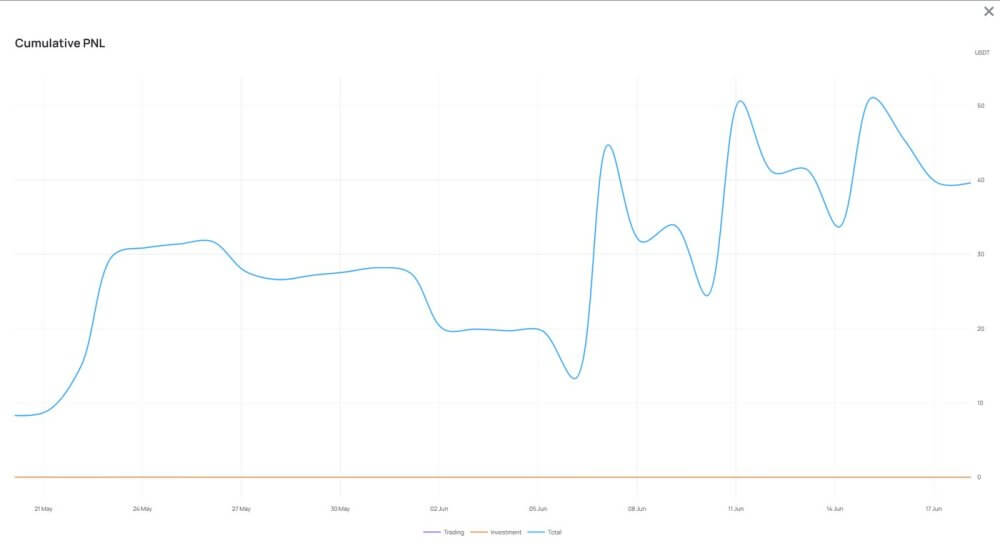
Uni SOL 3% – Pro had the smoothest climb: PnL rose quickly from about +9 USDT to +30 USDT in the first few days, held a plateau near +25–30 USDT through most of the period, then broke out twice – first to roughly +44 USDT, then above +50 USDT – before settling around +40 USDT by 18 June.
Uni XRP 5% – Pro dipped to about –17 USDT around 27 May, staged a sharp recovery past +35 USDT, cooled to a flat patch near zero in early June, then climbed again to finish near its period high of +65 USDT after a strong push around 13–14 June.
Turnover activity was consistent throughout the period for all three bots, with the busiest days clustering around the early-June price drop and the mid-June recovery. ETH’s strategy generated the highest turnover by a wide margin – about 2.5–3 times SOL’s and XRP’s – while also matching the largest share of its own orders.
| Bot | Total orders | Matched orders | Filling rate |
| Uni ETH 3% – Pro | 27,744 | 5,230 | 18.8% |
| Uni SOL 3% – Pro | 32,483 | 3,621 | 11.2% |
| Uni XRP 5% – Pro | 31,604 | 2,439 | 7.7% |
| Combined (3 bots) | 91,831 | 11,290 | 12.3% |
Combined, the three bots processed 91,831 total orders and matched 11,290 of them (12.3%), on 264,661 USDT of combined turnover. This is the same principle highlighted in earlier CTP updates: a bot should place orders according to its strategy and wait for the right conditions, not force execution at any price.
For users evaluating crypto robot trading solutions, these metrics highlight the importance of execution discipline rather than simply maximizing filled orders.
Uni XRP 5% – Pro: net balance started near 2,220 USDT, dipped to a trough around 2,196 USDT as price fell, then recovered to close the period at 2,288.9 USDT.
Uni ETH 3% – Pro: balance eased from about 4,080 USDT to roughly 4,000 USDT at its low point during the steep ETH price drop, then climbed back to 4,128.24 USDT by the end of the period.
Uni SOL 3% – Pro: balance held in the narrowest band of the three, slipping from about 1,944 USDT to near 1,920 USDT while SOL price fell the hardest in percentage terms, then recovering to 1,952.98 USDT.
In every case, balance did not simply track price down. The falling-mode logic and loan strategy usage cushioned the decline and, for stretches of the chart, let balance keep growing even while the underlying asset price was still moving down or sideways.
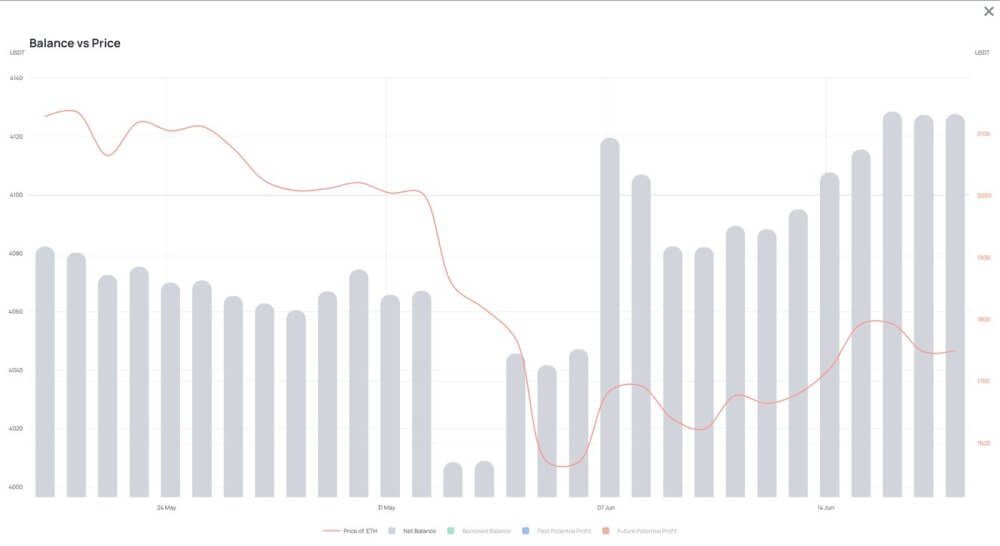
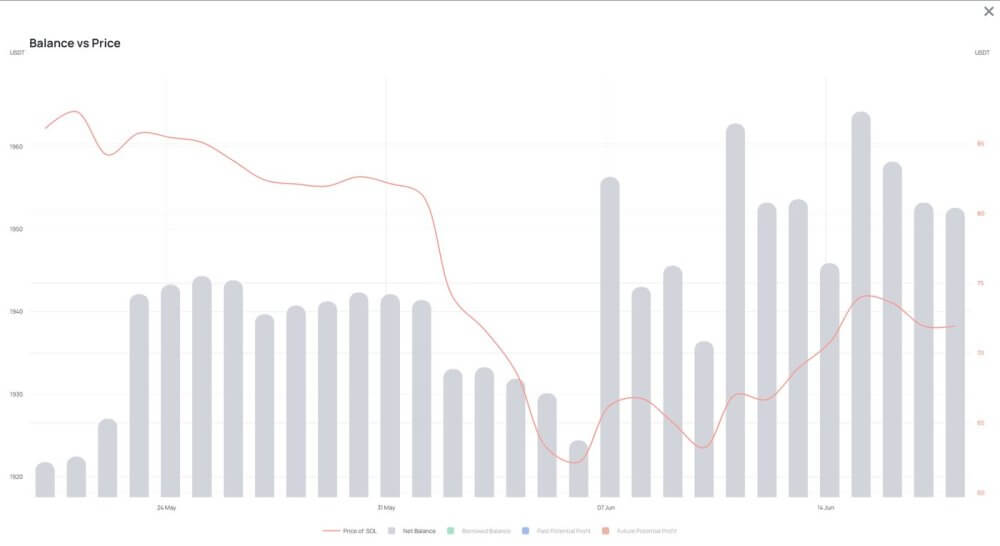
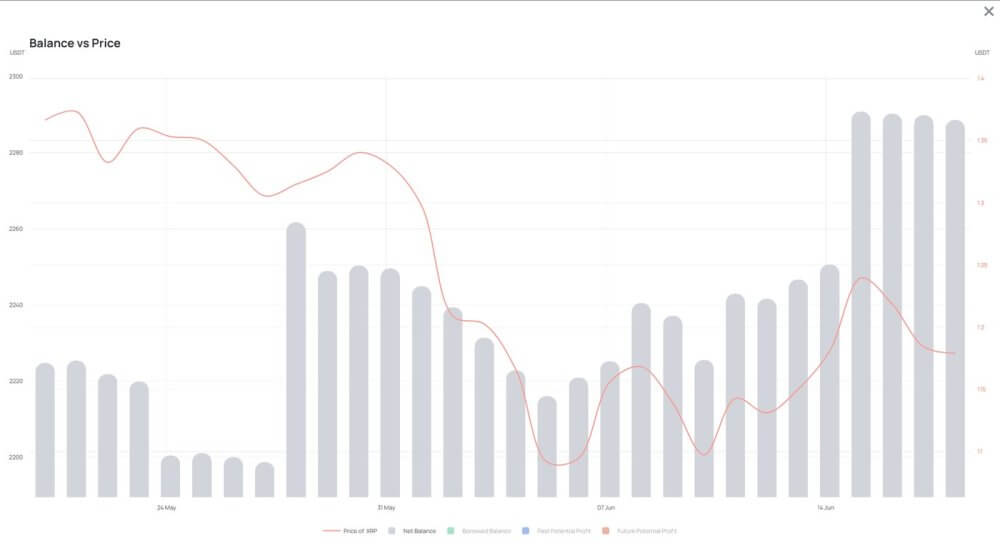
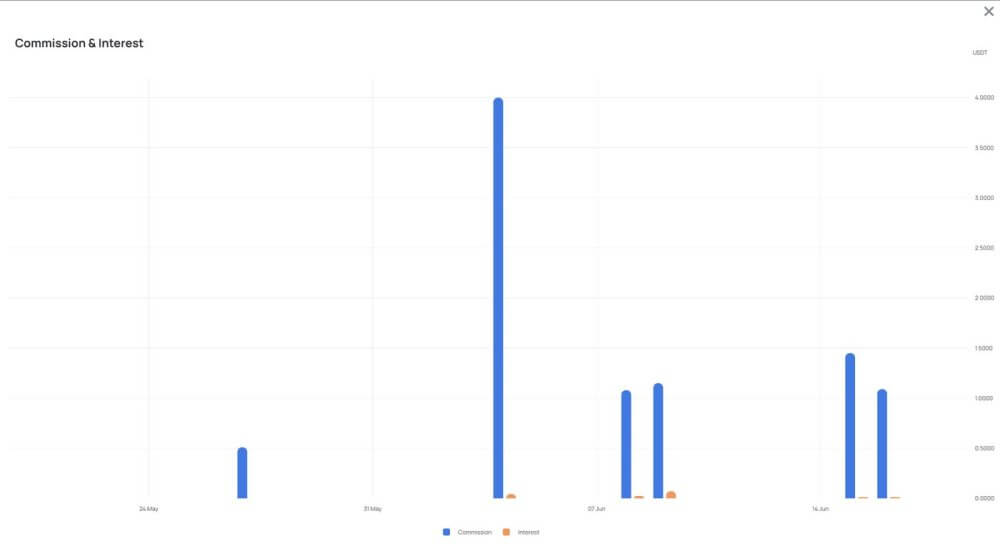
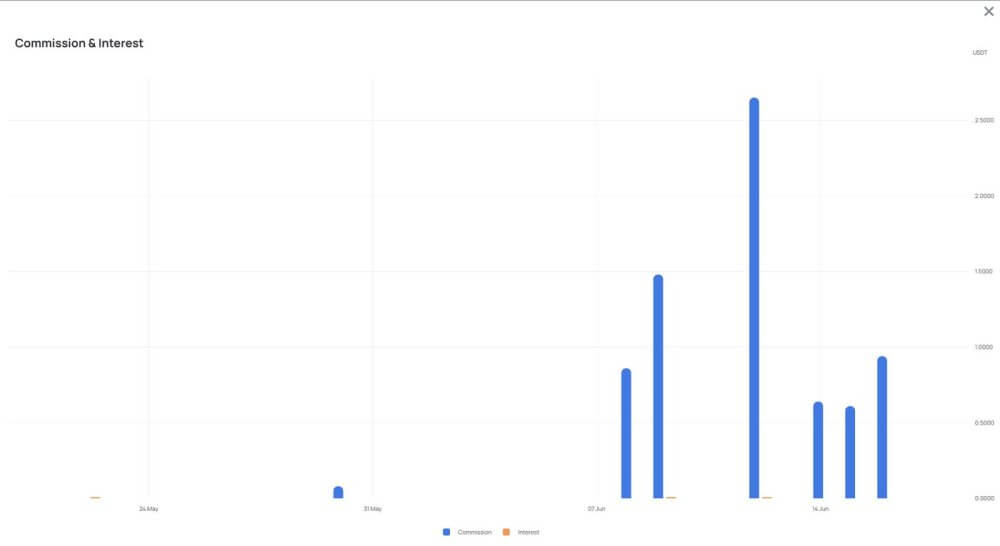
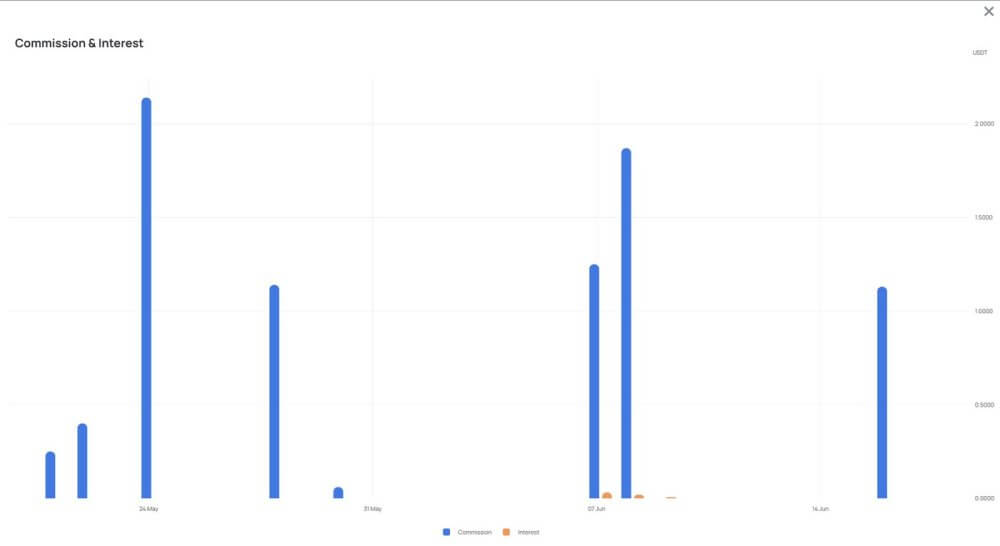
All three bots ran with the same commission-control mechanism that prioritizes maker-side execution. Across the board, commission stayed a small fraction of turnover and consumed only a modest share of total profit.
| Bot | Commission | Turnover | Commission / turnover | Commission / Balance | Commission / PNL |
| Uni ETH 3% – Pro | 9.3 USDT | 154,209 USDT | 0.006% | 0.22% | 17% |
| Uni SOL 3% – Pro | 7.3 USDT | 60,241 USDT | 0.012% | 0.37% | 18.7% |
| Uni XRP 5% – Pro | 8.3 USDT | 50,211 USDT | 0.017% | 0.36% | 12.6% |
| Combined (3 bots) | 24.9 USDT | 264,661 USDT | 0.009% | 0.29% | 15.7% |
Combined commission across the three bots was 24.9 USDT against a combined PnL of 158.51 USDT – commission took up roughly one-sixth of total profit. ETH’s commission-to-turnover ratio was the lowest of the three, consistent with its dashboard showing a 94% maker share for the period. Efficient fee management remains an important differentiator for any ai trading bot crypto strategy, especially when operating at high order volumes.
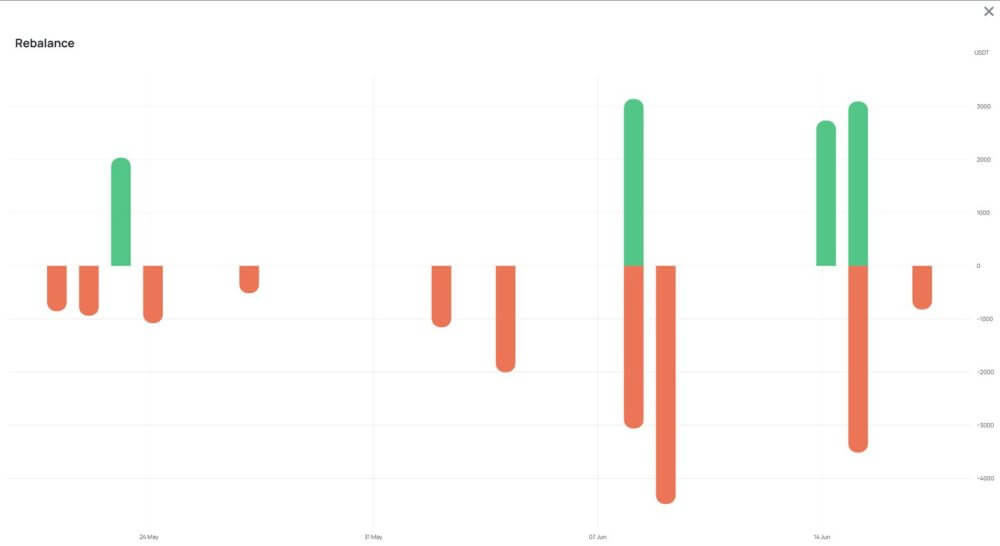
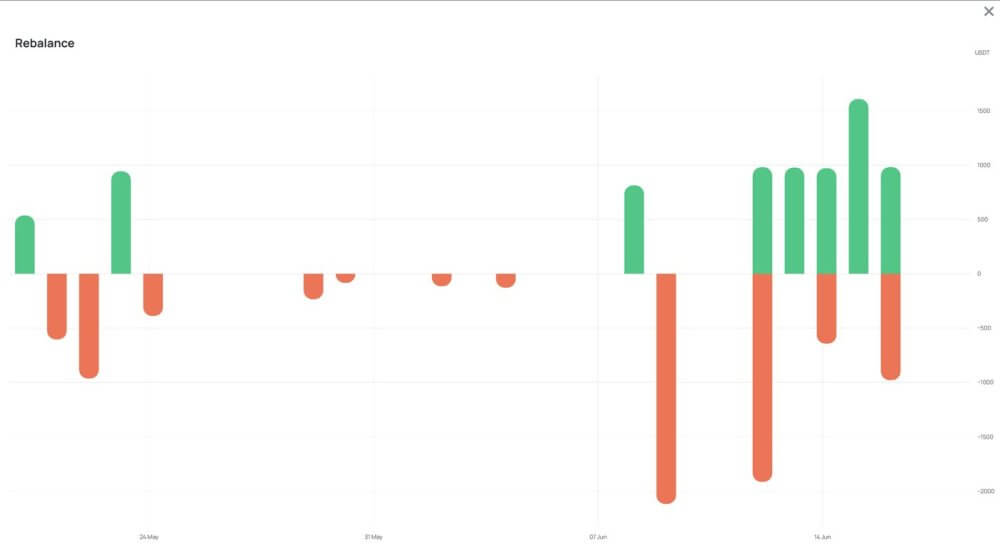
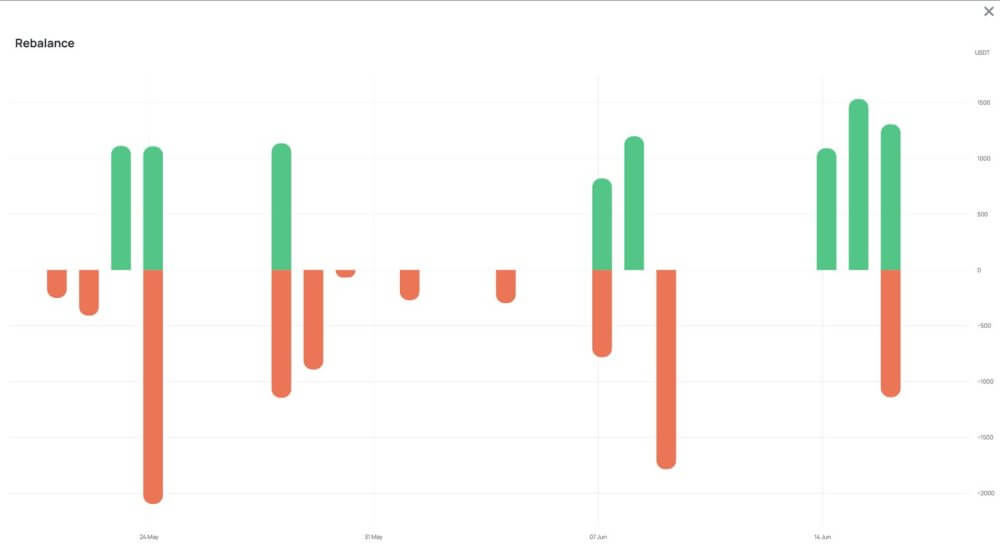
The rebalance chart shows how each bot shifted funds between the base asset and FDUSD as price and strategy conditions changed. All three charts show a mix of inflows (green) and outflows (orange/red), with the largest single moves – in the +1,000 to –2,000 USDT range – clustering around the sharpest price swings of the period.
This rebalancing activity is closely tied to the bots’ ability to preserve balance during the price declines covered earlier: redistributing assets as the market moves keeps the strategy from becoming overexposed to one side of the trade, which matters most for higher-volatility assets like SOL and ETH.
Across the same 30-day window, the three Pro bots combined for +158.51 USDT in total PnL on 264,661 USDT of turnover and 91,831 total orders, of which 11,290 were matched. Uni XRP 5% – Pro led on PnL and ROI, Uni ETH 3% – Pro led on turnover and order-matching efficiency, and Uni SOL 3% – Pro delivered the steadiest balance growth while paying the lowest commission in absolute terms.
An additional point worth noting is that Uni XRP 5% – Pro is appearing in a monthly performance review for the second consecutive time. In the previous update, the bot also delivered a positive result, and it has now followed that performance with another profitable 30-day period. While two months do not establish a long-term track record, they do provide an encouraging indication of strategy stability and consistent execution across different market conditions. For users evaluating crypto trading automation solutions, repeatable positive performance is often more meaningful than a single standout result.
Together, these results illustrate how crypto trading bot development focused on execution quality, adaptive risk management, and low-cost trading can deliver consistent performance across multiple assets.
The most important result is not any single number, but that all three bots stayed net positive through a period that included sharp price declines in ETH and SOL and a real-but-shallower pullback in XRP. Each bot did this by combining falling-mode defenses, loan-strategy usage during downtrends, active rebalancing, and the new low-commission execution mechanism – the same set of tools, applied consistently across three different assets.
If you want to put a strategy like this to work on your own account, get in touch with the CTP team to discuss crypto trading bot development services, bot setup, configuration, and risk parameters. And if you already have a trading strategy of your own, we can help formalize it, simulate it, test it, and run it through CTP’s crypto trading simulator before moving it into active operations – turning your idea into a structured, data-driven trading system.
Since moving into active operations mode with AI crypto bots in March 2026, we are now returning with a refreshed monthly update format.

As we continue advancing SSA CTP and ctbots.ai, we are approaching an important milestone — entering the active operations stage.
you're currently offline