SSA UI Kit: January 2026 Update
We continue to actively evolve SSA UI kit, our React-based component library for building complex dashboards and data-driven interfaces faster and more efficiently.
Pricing in ecommerce is shaped by a complex mix of factors. Every price you see online reflects interactions between manufacturers, distributors, retailers, competitors, and customer demand. Understanding how this ecosystem works is essential for building a sustainable pricing strategy.
Ecommerce prices are influenced by both internal business decisions and external market conditions. Key drivers include:
In online environments, price transparency is high—customers can compare offers instantly. This makes pricing highly dynamic and sensitive to even small changes.
At the core of ecommerce profitability is margin:
Margin = Selling price – Total costs
The challenge is that many sellers offer identical or very similar products at nearly the same price points. So how can businesses remain competitive while still maintaining profitability?
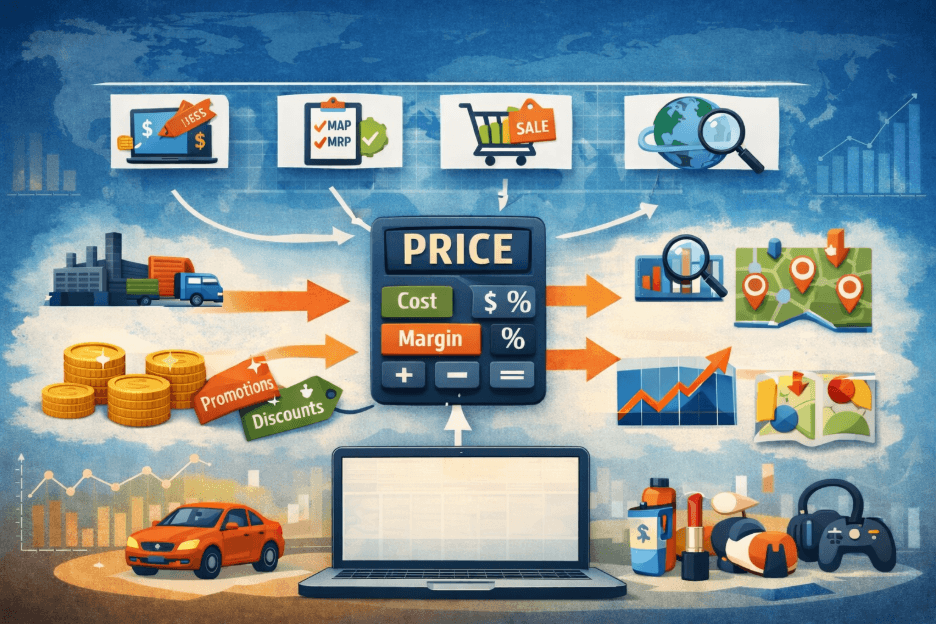
This is where pricing analytics becomes critical.
Instead of relying on static pricing rules, businesses can use data to continuously monitor the market and adjust their strategies. Pricing analytics allows companies to:
Modern pricing analytics provides visibility across the entire pricing ecosystem—from manufacturers to end customers.
1. MAP monitoring (Minimum Advertised Price) & Minimum Retail Price
Manufacturers often enforce pricing policies to protect their brand and avoid excessive discounting:
Monitoring these helps:
Analytics tools can detect violations, identify non-compliant sellers, and support enforcement.
2. Competitor intelligence
Competitor analysis today goes beyond simple price checks. It includes:
Distributors also influence pricing by supplying products at different costs across regions, leading to variation in retail prices.
3. Promotion & Discount tracking
Pricing fluctuations are often driven by promotions from:
Analytics helps distinguish real discounts from artificial ones and understand their impact on demand.
4. Price indexes by category and region
Instead of analyzing single products, companies can evaluate broader trends:
This helps identify systemic pricing issues and adjust strategies accordingly
5. Dynamic pricing based on market signals
Dynamic pricing uses real-time inputs such as:
This enables businesses to optimize pricing continuously and maximize revenue opportunities.
6. Global price monitoring
The same product may be priced differently across countries due to:
Monitoring these differences helps maintain consistency and avoid grey market issues.
So you already have the data for your market analysis—but how do you turn that data into actionable insights?
To truly benefit from pricing analytics, businesses need more than raw data. They need a powerful way to visualize, explore, and interpret that data through intuitive dashboards and analytical tools.
This is where the SSA UI kit becomes a key component in the pricing analytics workflow.
SSA UI kit is a modern React-based library of AI-friendly components accelerating the development of scalable, customizable, and high-performance dashboards and administrative panels.
It enables companies to transform complex ecommerce datasets into clear, interactive visualizations that support faster and better decision-making.
How SSA UI kit supports pricing analytics
With SSA UI kit, businesses can build dashboards that reflect all critical pricing metrics, including:
Instead of working with static spreadsheets, teams can interact with real-time dashboards that provide instant visibility into market changes.
Key advantages of SSA UI kit
By combining high-quality ecommerce datasets with a powerful visualization layer like SSA UI kit, businesses can fully realize the value of pricing analytics—turning raw data into clear, actionable insights that drive smarter decisions. To access the ecommerce datasets you need, explore Datasets.store.
While SSA UI kit provides the visualization layer, the quality of insights depends heavily on the underlying data. This is where Datasets.store plays a crucial role.
Datasets.store offers ready-to-use ecommerce datasets, including ecommerce product datasets and retail product datasets, allowing businesses to quickly access and download ecommerce datasets without building complex data pipelines.
By combining:
companies can build a complete pricing analytics ecosystem—from data collection to insight generation.
1. Protecting margins during promotions
Retailers can analyze competitor discounts and align pricing without unnecessary margin loss.
2. Detecting MAP violations
Brands can identify non-compliant sellers and enforce pricing policies effectively.
3. Leveraging stock gaps
When competitors run out of stock, prices can be adjusted upward to increase profitability.
4. Correcting underpricing
Category-level analysis can reveal where prices are too low, allowing margin improvement.
5. Aligning global pricing
Monitoring international markets helps maintain consistent pricing and brand perception.
6. Managing distributor influence
Insights into distributor pricing help reduce inconsistencies across channels.
7. Responding faster to market changes
Real-time dashboards allow immediate reaction to competitor activity.
In today’s ecommerce landscape, pricing is shaped by a complex ecosystem of manufacturers, distributors, retailers, and competitors. Success depends not only on having access to data but also on the ability to interpret and act on it.
Pricing analytics provides the foundation for smarter decisions—helping businesses monitor competitors, track promotions, enforce pricing policies, and adapt dynamically to market changes.
However, data alone is not enough. To truly gain a competitive edge, companies need tools that transform raw data into meaningful insights.
By leveraging ecommerce datasets alongside powerful visualization solutions like SSA UI kit, businesses can:
If you’re looking to elevate your pricing strategy, now is the time to invest not only in high-quality data but also in the tools that turn that data into actionable insights.
Start building smarter pricing analytics workflows today with the right combination of ecommerce data and powerful dashboard solutions.
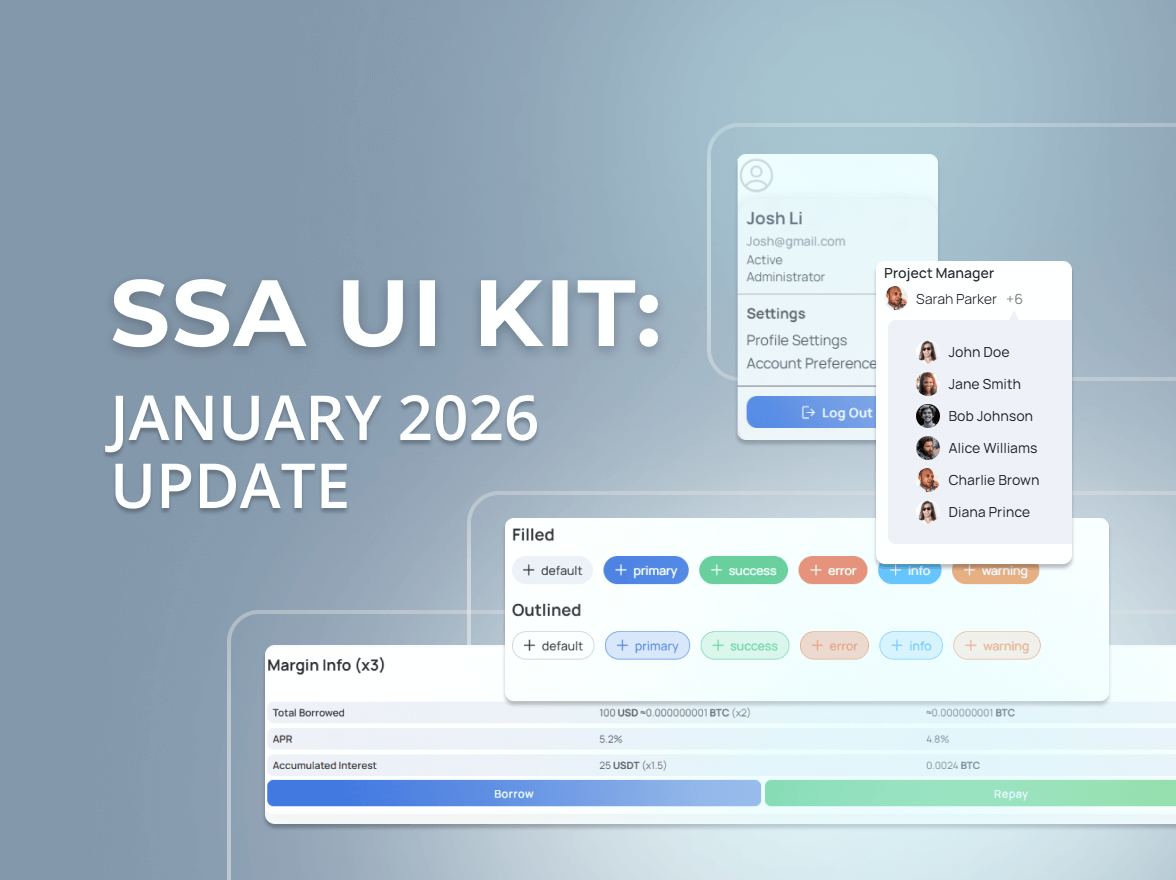
We continue to actively evolve SSA UI kit, our React-based component library for building complex dashboards and data-driven interfaces faster and more efficiently.

AI is changing how digital products are built. Instead of manually crafting every interface, we are entering a new era where intelligent systems like ChatGPT can generate dashboards, and admin panels automatically.
you're currently offline